
 Login
Login
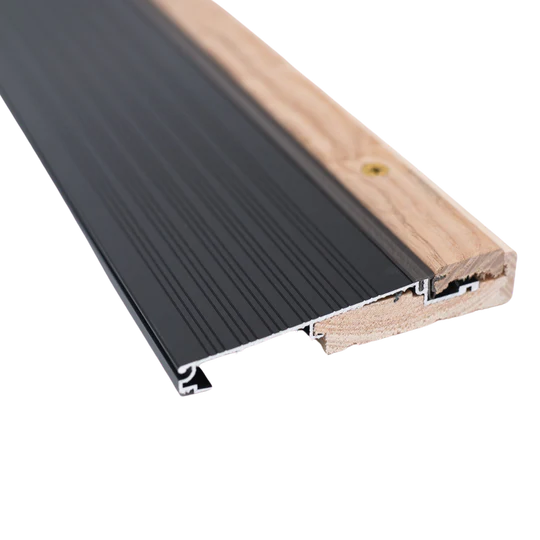
Adjustable Threshold
This is the most common type of threshold. It has a strip of wood running the full width of the door slab, which can be lifted and lowered to compensate for minor expansion and contraction in the door slab due to seasonal fluctuation. This threshold allows you have the best seal all year long.
- How to Adjust: The threshold is adjusted by tightening or loosening several screws which run the length of the sill cap.
- Finish: All of our in-stock doors are equipped with an adjustable threshold in a matte black finish. Black tends to be the best color for residential applications because it doesn’t draw attention.
- Threshold Extensions: All jamb extensions come with a threshold extension. Threshold extensions should be attached to the sill before the door is installed.
- Threshold Depth: The depth of the threshold on custom doors is selected by the factory based on the jamb depth of the unit. There is a detailed diagram of the threshold on each factory drawing which should be reviewed before the door goes into production.
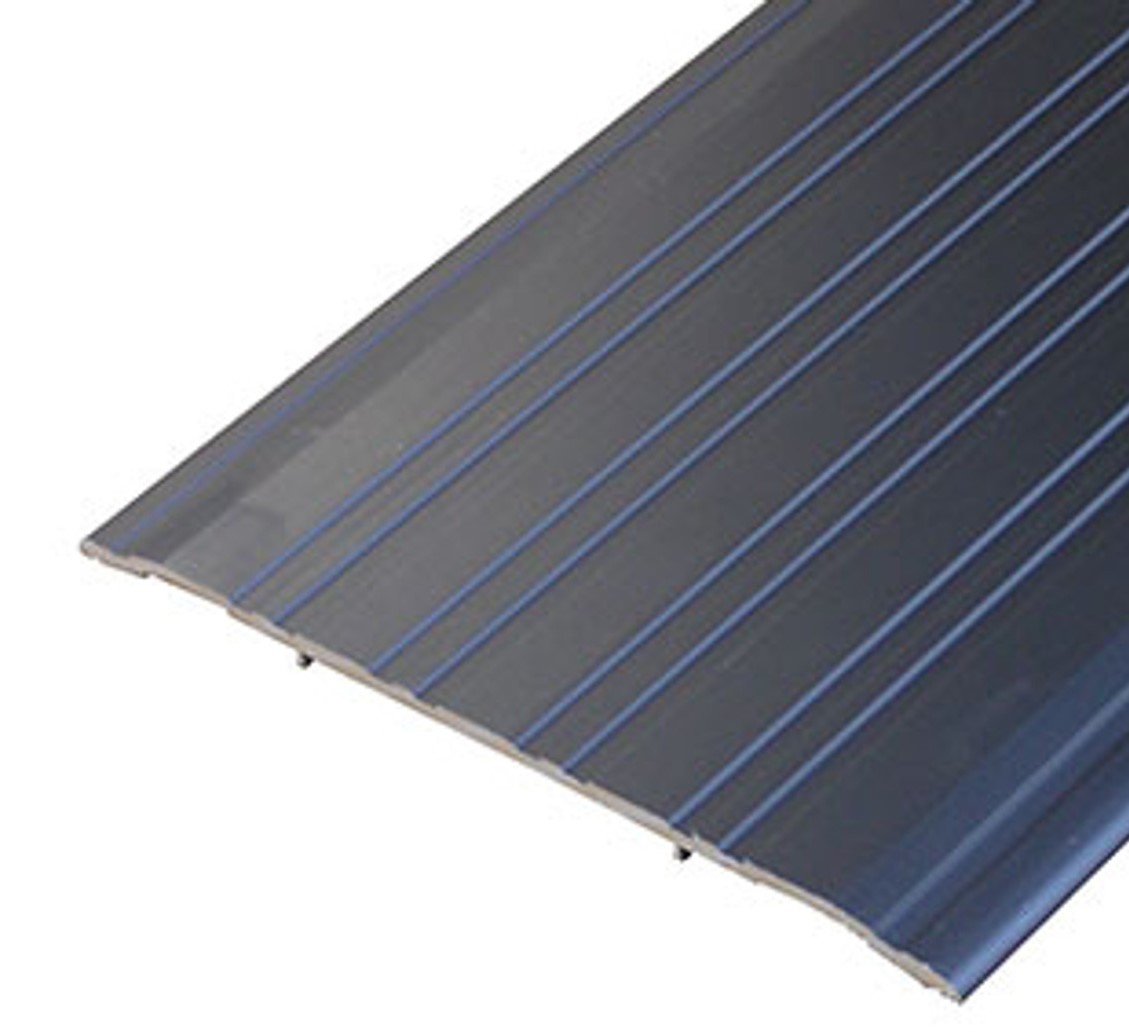
Flat ADA Threshold
These thresholds have a low profile specifically designed for wheelchair access, but they have other uses as well. Our ADA thresholds are thermally broken and made from extruded aluminum for durability.
- Pivot Doors: All Pivot doors must be equipped with a flat ADA threshold to allow the hinge side of the slab to swing forward creating the floating illusion.
- Commercial Applications: All commercial properties must be equipped with flat ADA compliant thresholds for wheelchair access and to allow the door slab to swing outward
- Weather Stripping: All doors are paired with a sweep under the slab to reduce intrusion from wind, debris, and insects. Pivot doors have three layers if under-door weather stripping for added protection.
- Weather Proofing: Due to their shape and low profile, flat ADA thresholds are not weather proof. They must be paired with a large overhang and/or drainage system to prevent leaks. If you live in an environment with severe weather, particularly heavy rains and winds, you might want to consider a door which can be paired with an adjustable sill or hydrosill.
- Finish: All of our ADA thresholds come in a flat black finish, which pairs well with most homes.
- Depth: The depth of the sill is selected by the factory based on the jamb depth of the door unit.
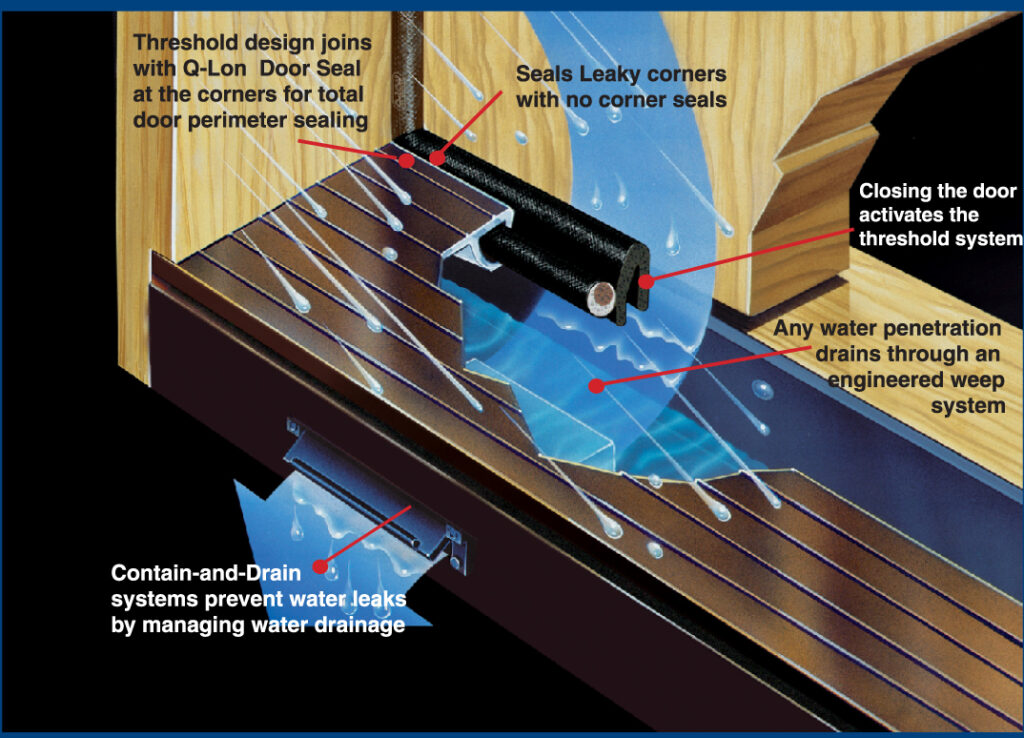
Hydrosill
Hydrosills are designed to offer superior protection against water and leaks.
- Benefits: This design is very helpful in areas which experience driving rain or doors which don’t have a sufficient overhang. It diverts water from the doorway, preventing leaks. It also withstands water penetration at 35 mph for up to 3 hours. Eliminates the need for a bottom sweep, reducing drag.
- Construction: They have a plastic foam strip called “Q-LON Compression seal that runs the full width of the door slab. The foam catches water as it rolls down the door and releases it into a channel under the threshold. The channel has drains which allow the water to flow away from the entrance.
- Applications: They come standard on all double doors and steel exterior doors. They can be added to any non-pivot custom doors, but they are not available on in-stock doors.
- Finish and Design: They are available in a dark finish and you will receive a detailed diagram on your factory drawing. The width of the sill is selected by the factory based on jamb depth of the unit.