Login
Login
How to Measure
The information below is a guideline, but it will not apply to all projects. The person installing the door is responsible for the final measurements which impacts the fit and function of the door.
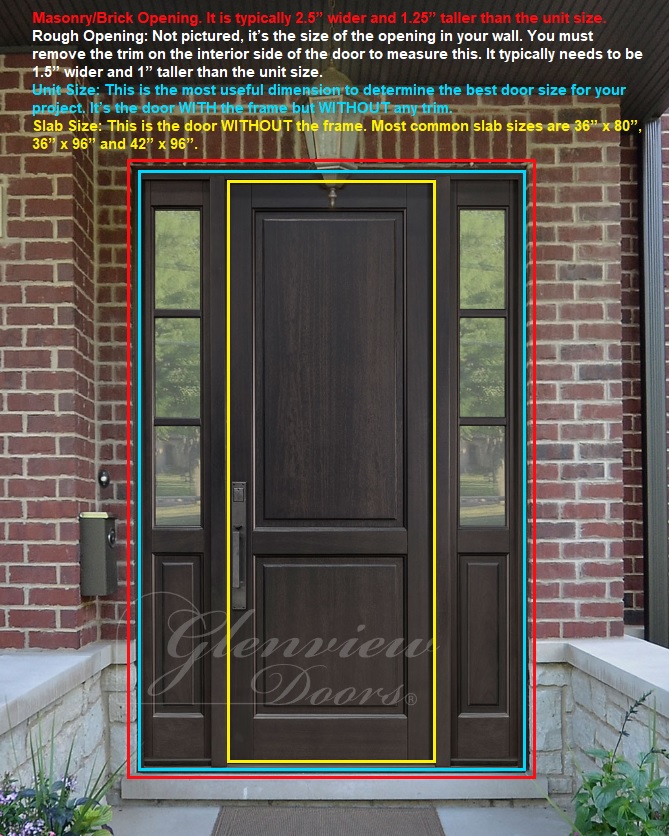
Brick Opening/Masonry Opening • Rough Opening • Unit Size • Door Slab Size
BRICK/MASONRY OPENING
This is not just for brick or stonework, it’s applicable to any door which is being installed in an structure made of materials which can’t be adjusted. The brick opening is nice to have, but we will still need the Unit Size to place an order.
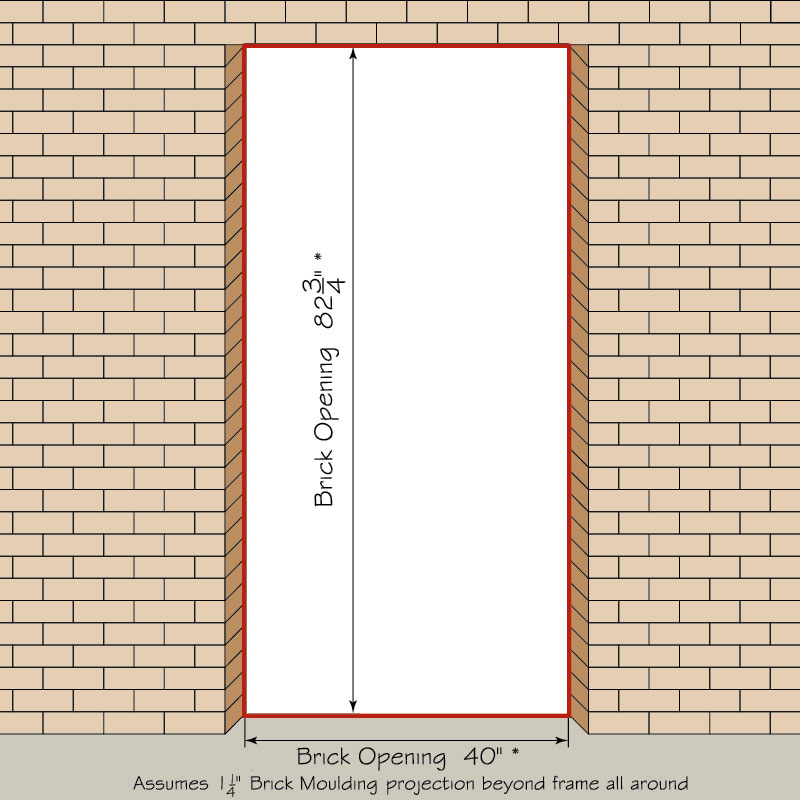
The Brick Opening is measured from the exterior side of the door, side to side and top to bottom.
The Brick Opening is typically about 2-1/2″ wider and 1-1/4” taller than the Unit Size.
ROUGH OPENING
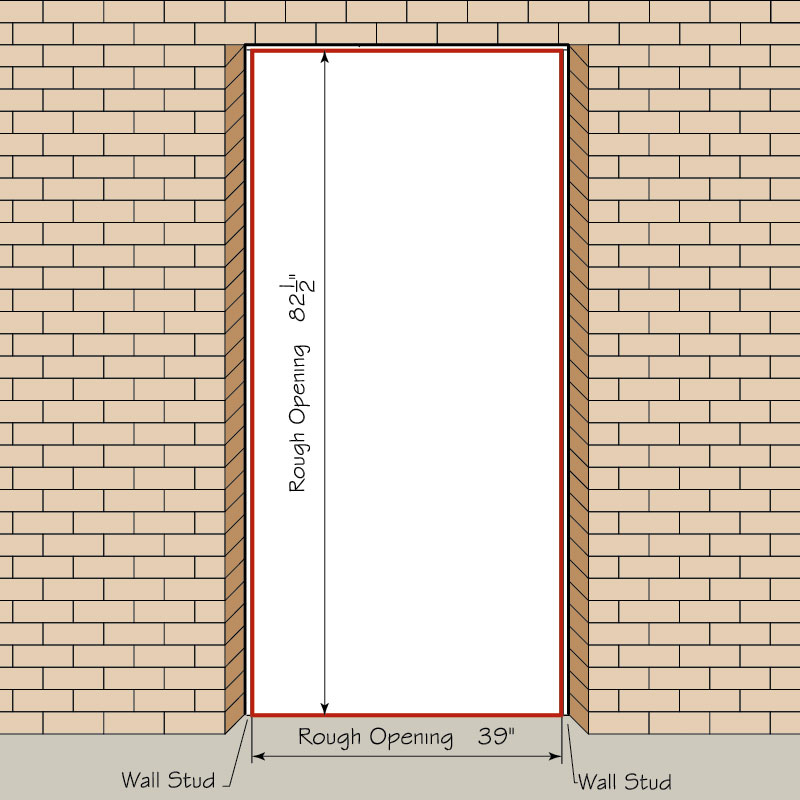
The Rough Opening is the space between the two wall studs which the door unit will be attached to.
The Rough Opening is typically about 1-1/2” wider and 1” taller than the unit size.
The space that is left over will be used by the installer to shim and square the unit into place.
UNIT SIZE
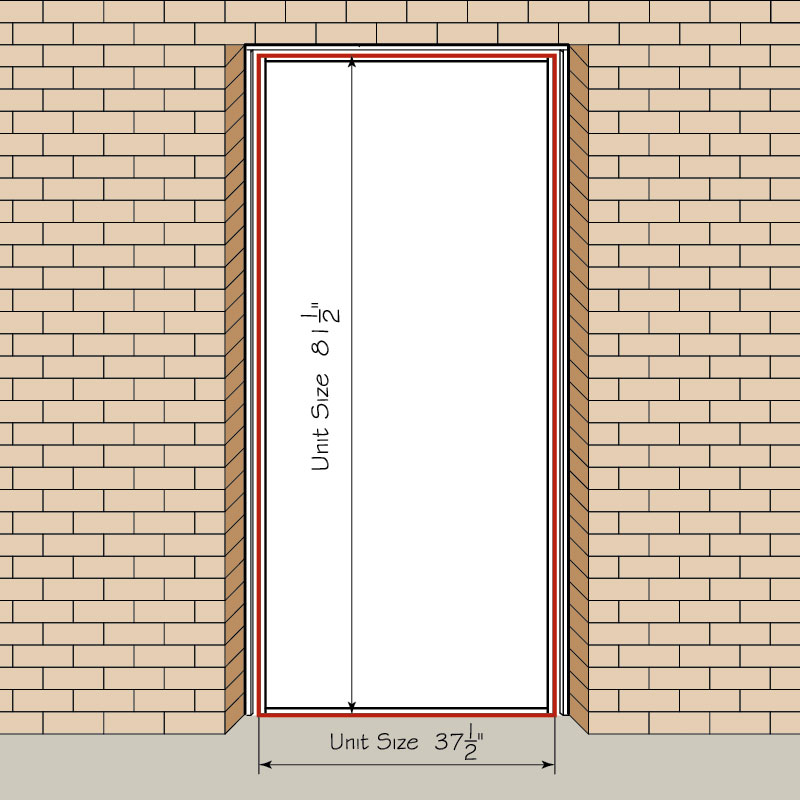
The Unit Size is the Door Slab WITH the FRAME. This is the information we need to place an order because it is the true size of what we are manufacturing. If the door comes with sidelights or a transom, they should be included in the unit size. This is the dimension we need to determine if a project is eligible for an in-stock door. We will also need the jamb depth to place an order. This is the thickness of the walls.
The unit size is typically 1-1/2″ narrower and 1″ shorter than the Rough Opening
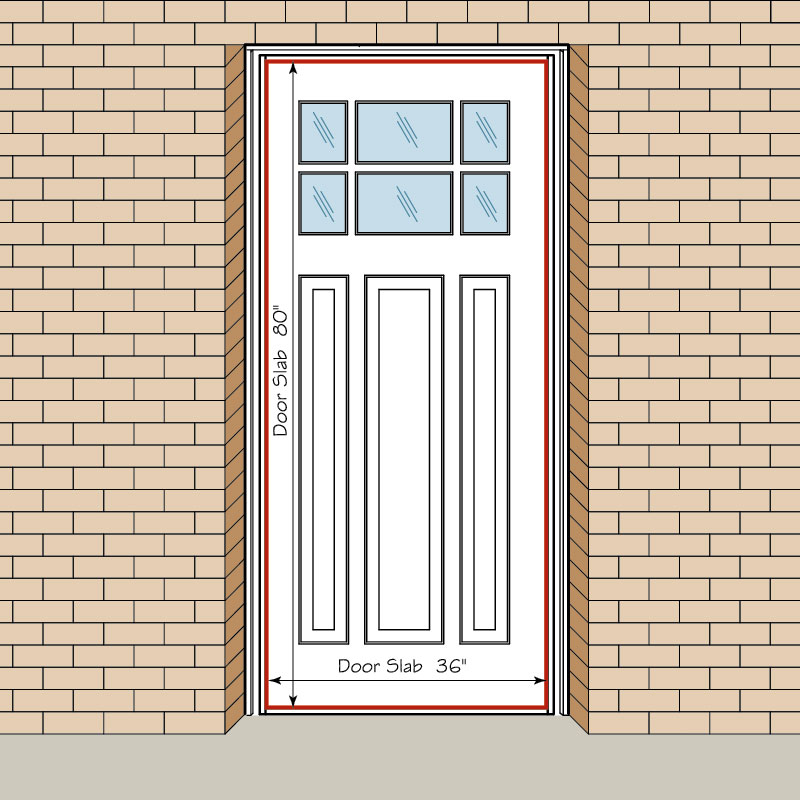
SLAB SIZE
The slab size is the size of the door on it’s own without any frame.
A door slab is typically 1-1/2” narrower and 1-1/2″ shorter than the Unit Size.
Most manufacturers have different standards for their doors size, so it’s rare to find a door which is exactly 36″ x 80″. As long as the unit size is the same or similar, your new door should fit nicely.